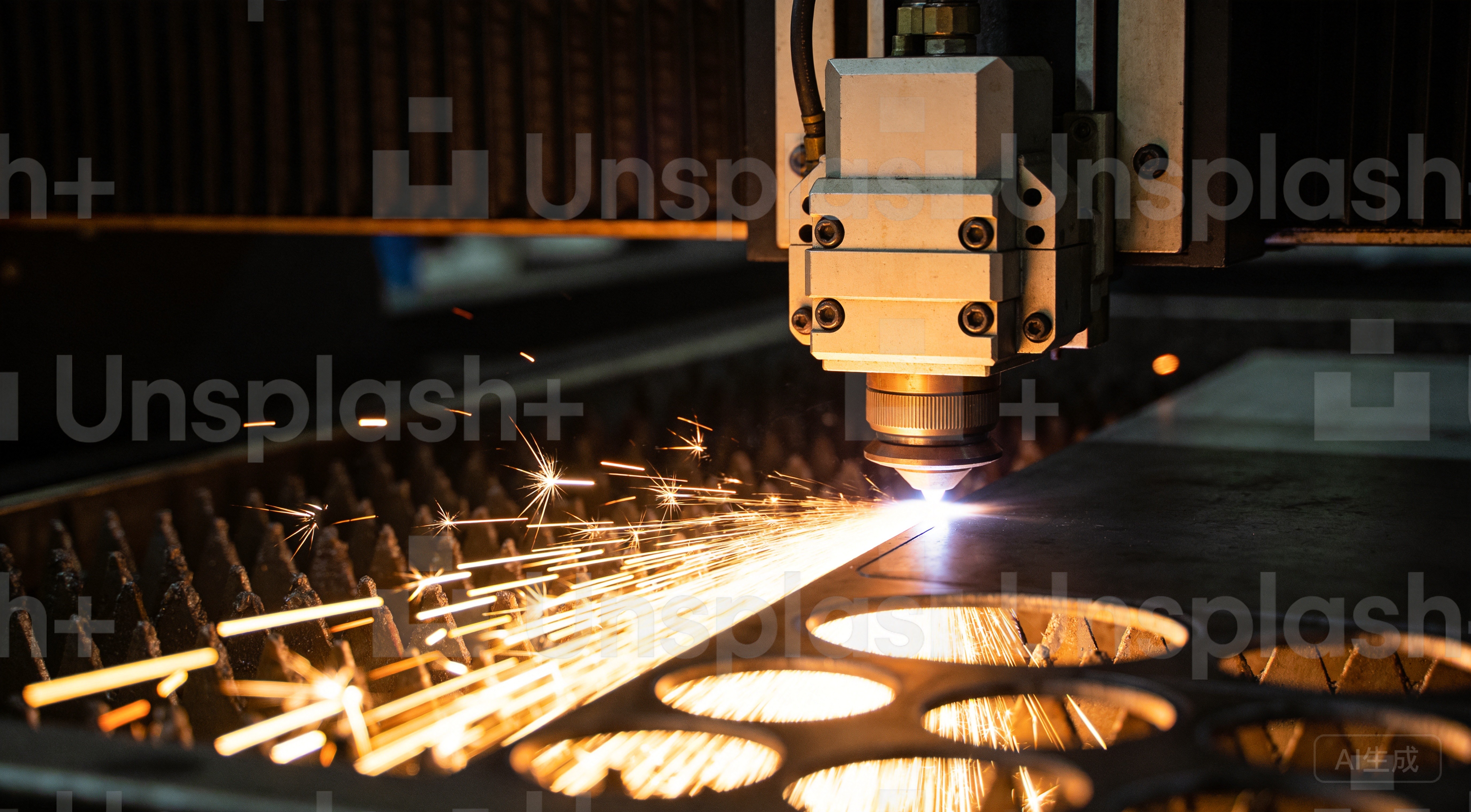
Edge Burr
Sharp, raised edges on cut profiles that require secondary deburring operations before parts can be used.
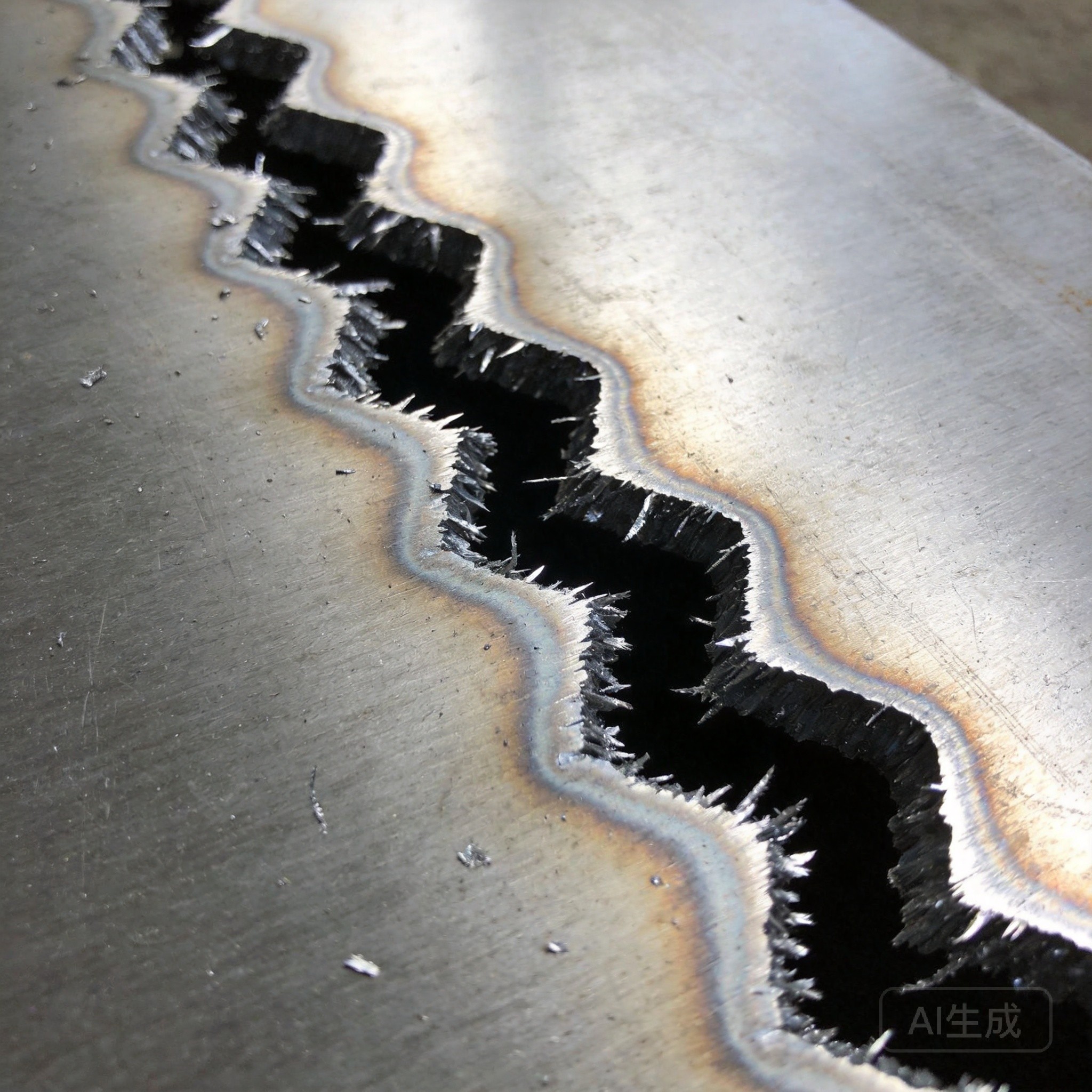
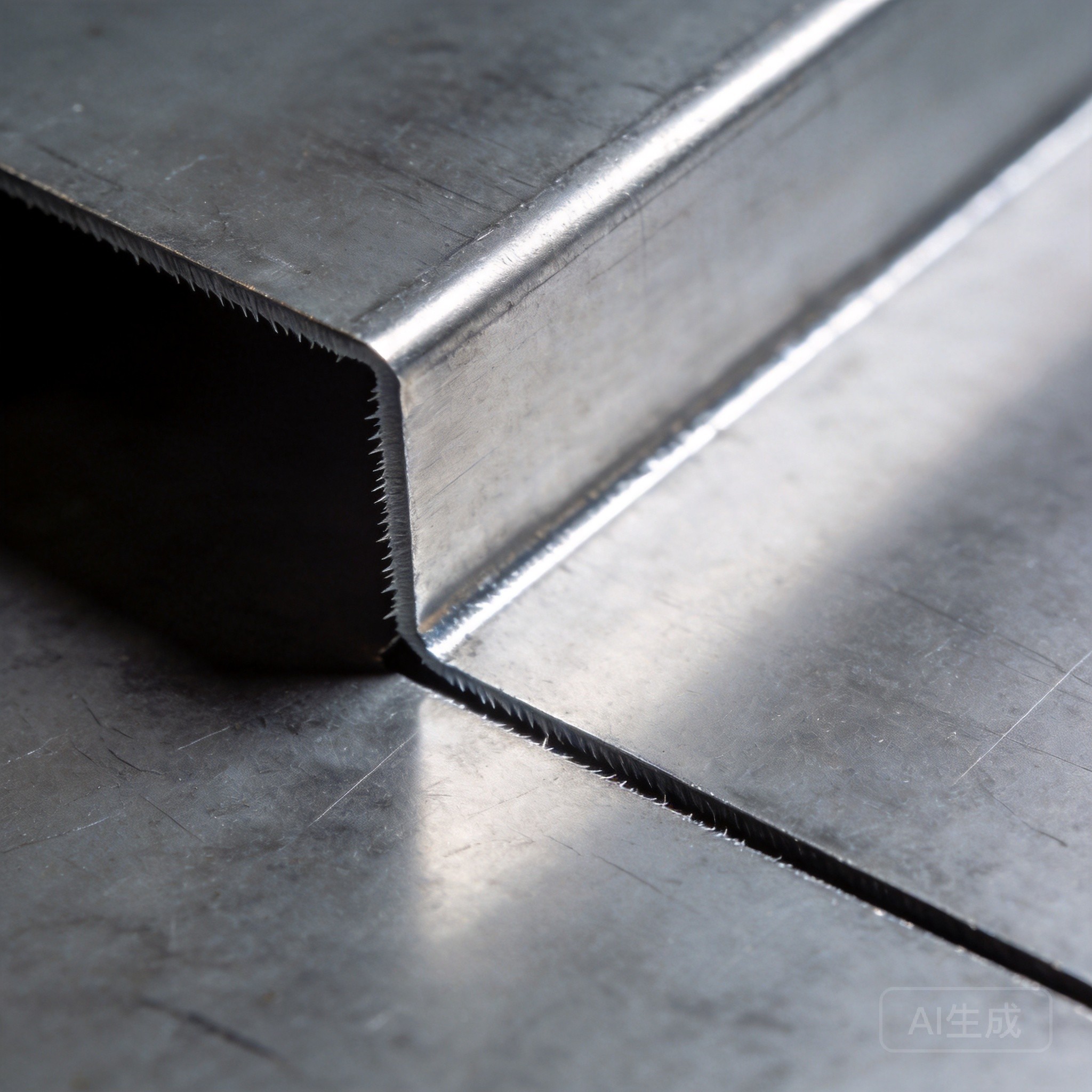
- Top-Edge Burr: Sharp raised material along the top edge of the cut, typical of slow cutting speeds causing excessive heat accumulation.
- Bottom-Edge Burr: Burr formation on the underside, often accompanied by slight dross. Indicates focus position or gas pressure imbalance.
- Directional Burr: Burr present on one side of the cut direction only, indicating beam alignment or polarization issues.
- Corner Burr: Burr concentrated at corners and sharp turns in the cutting path where heat accumulates at reduced feed rates.
Focus Position Error
Incorrect focus position relative to material surface causes uneven energy distribution across the kerf, resulting in incomplete separation at edges.
Gas Pressure Imbalance
Gas pressure either too low (fails to clear melt) or too high (causes turbulent cooling that re-solidifies material unevenly).
Beam Polarization Effect
Linear polarization causes direction-dependent absorption, resulting in burr formation on one cut direction while the other remains clean.
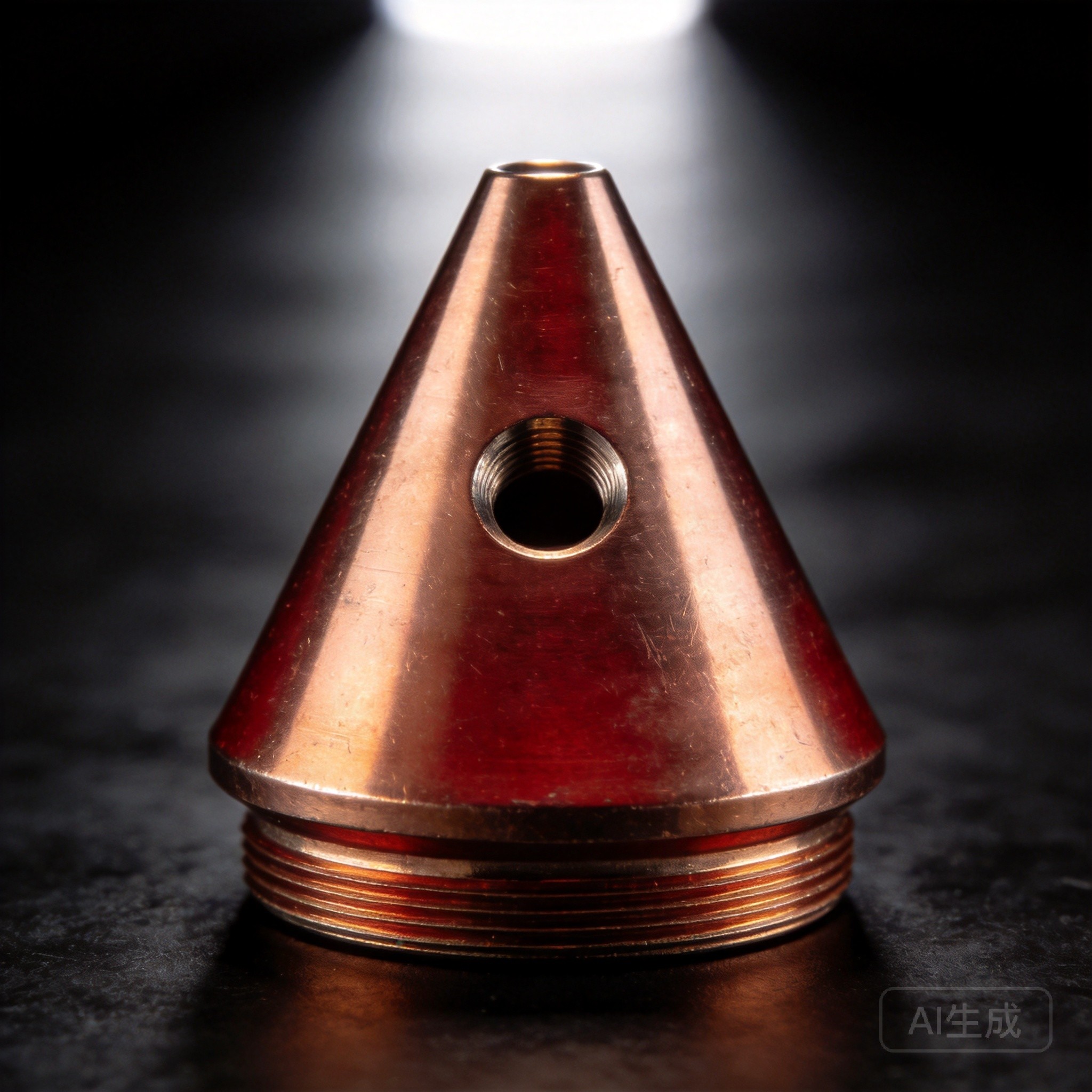
Nozzle Standoff Distance
Incorrect nozzle-to-plate distance disrupts gas flow dynamics and melt ejection, leading to inconsistent edge quality.
| Parameter | Poor Piercing (Typical) | Recommended Range | Improvement |
|---|---|---|---|
| Focus Position | -1mm (above center) | -3mm (deeper) | Burr reduced 70% |
| Gas Pressure | 1.0 bar | 0.7 bar | Clean edges |
| Cutting Speed | 1200 mm/min | 1400 mm/min | Minimal burr formation |
| Nozzle Standoff | 0.5mm | 1.0mm | Consistent gas flow |
Still Having Piercing Problems?
Our team of laser cutting specialists is ready to help you optimize your cutting process. Send us your material specs and we'll provide a tailored solution.
Contact Engineering Team